Data center network architecture determines throughput under real load because it controls hop count, congestion behavior, and failover—not just port speed.
This guide compares spine–leaf, three-tier, and Clos/fabric designs and shows what to validate before you scale: oversubscription ratios, ECMP balance, queueing and drops, and upstream path diversity.
In modern data centers, performance depends on end-to-end design and operations—not peak link speed on a spec sheet. The architecture you choose shapes how devices connect, how traffic flows, and how the network behaves during congestion or failure.
High-throughput environments demand sustained and repeatable performance. When topology and routing don’t match real traffic patterns, you get the symptoms that matter: tail-latency spikes, packet loss, and escalating operational overhead as workloads grow.
What Is Data Center Network Architecture?
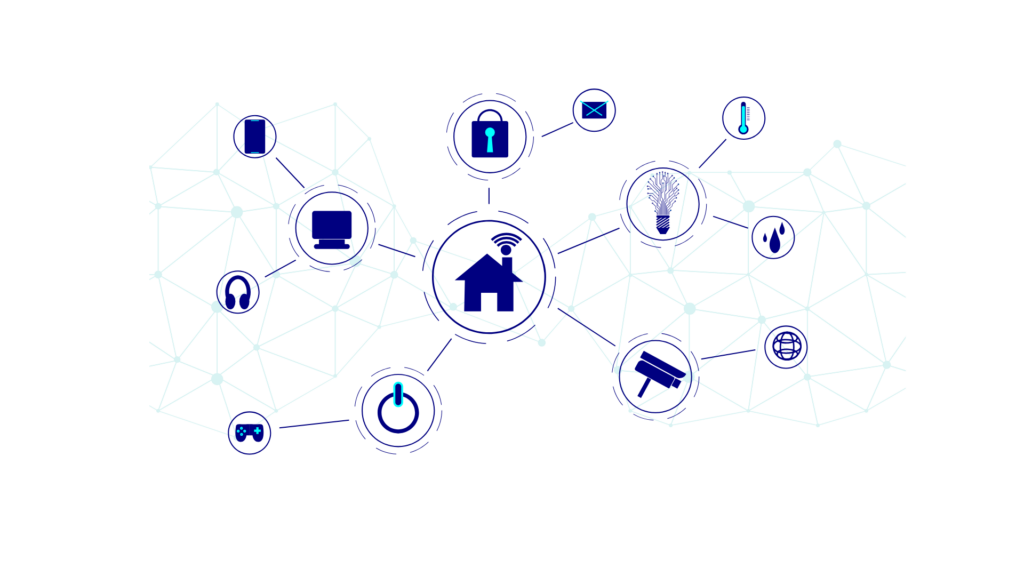
Data center network architecture is the blueprint for how traffic moves through your data center—physically (devices and cabling) and logically (routing, segmentation, and policy). It determines path length, congestion behavior, failure domains, and how easily you can scale without redesign.
Definition and scope
Data center network architecture covers two layers:
- Physical infrastructure: network devices, switches, routers, cabling, physical servers, storage devices, load balancers, and upstream connections, power distribution units
- Logical controls: IP addressing, routing, segmentation, and (when used) Software-Defined Networking (SDN) policies.
Together, these decide how traffic flows, what happens when links or devices fail, and whether performance stays predictable as demand grows.
| Architecture | Best for | Latency profile | East–west scaling | Operational complexity | Where it breaks |
|---|
| Spine–leaf | Modern, general-purpose DCs; high east–west traffic | Consistent (fixed hop count) | Strong (add spines/leaves) | Moderate | High oversubscription, under-sized uplinks, weak upstream design |
| Three-tier (access/aggregation/core) | Smaller or stable environments; legacy designs | More variable (more hops) | Limited at scale | Low–moderate | Aggregation congestion, chokepoints, unpredictable latency as east–west grows |
| Clos / fabric-based | Dense compute; cloud-scale environments | Consistent when engineered well | Very strong (many equal paths) | Higher (needs automation/visibility) | Complexity without tooling; misconfigured ECMP/overlays hide bottlenecks |
Need to validate throughput end-to-end for LATAM users? EdgeUno’s network reviews follow a simple flow and focus on what actually limits performance: ECMP balance, oversubscription, queueing/drops, and upstream path diversity.
If LATAM user experience is a priority, include upstream path diversity and regional egress in your throughput review. Talk to us today to learn more.
Core Design Principles for High-Throughput Data Centers
High throughput requires three things: scale without redesign, predictable latency under load, and failure recovery that doesn’t collapse performance. Let’s look closely at these:
1) Scalability without redesign
High-throughput environments should expand without repeated re-architecture. Designs that depend on fixed chokepoints or tightly coupled hardware increase cost and risk over time.
Look for data center network topologies that support incremental growth by adding switches, links, or capacity without changing the core model.
2) Low latency and high availability by design
Low latency and availability start with redundancy across:
- Links
- Switching devices
- Upstream connectivity (providers/paths)
Reducing single points of failure improves fault tolerance and supports faster failover for real-time and business-critical services.
Predictability comes from matching the architecture to traffic behavior and controlling congestion drivers, such as:
- Oversubscription at the access layer
- Unbalanced east-west traffic distribution
- Limited visibility into packet loss and queueing
When compute, storage, and external connectivity are aligned, the network is more likely to sustain throughput during peak demand.
Bottleneck Finder: What to Check Beyond Utilization
High-throughput issues often hide behind “normal” average utilization. Add these checks before you scale:
- Microbursts: short bursts that overflow buffers and create drops even when average links look fine
- Queue depth and drops: where congestion is forming, and whether it is persistent or intermittent
- ECMP imbalance: a small number of hot paths carrying most flows due to hashing mismatches
- Storage hot spots: east-west spikes between compute and shared storage that look like “random” latency
- Upstream saturation: north-south congestion that shows up as tail latency, not constant loss
High-throughput architecture checklist (use before you scale)
Use this checklist to evaluate whether your data center network architecture can sustain growth:
- Oversubscription: Are access/leaf uplinks sized for worst-case east-west peaks, not averages?
- Redundancy: Do you have redundant links/devices and redundant upstream paths?
- ECMP: Is ECMP enabled end-to-end, and do hashing policies distribute your real traffic evenly?
- Failure domains: Are blast radii contained (e.g., per rack/leaf/zone), with clear failover behavior?
- Monitoring: Can you observe packet loss, latency, utilization, and congestion points across the fabric?
Want an end-to-end throughput review? Request a congestion and path audit covering oversubscription, ECMP balance, queues/drops, and upstream path diversity. Talk to an expert.
Modern Data Center Network Architectures Explained
Most high-throughput data centers use spine–leaf or a Clos-based fabric because these designs keep paths predictable and scale horizontally. Three-tier still fits smaller or stable environments, but it becomes difficult to keep latency and throughput consistent as east–west traffic grows.
If you’re designing for regional users (especially LATAM), architecture also includes where traffic exits the facility. Your internal fabric can be perfect and still underperform if upstream path diversity and peering placement are weak—this is where EdgeUno Connectivity and EdgeUno Data Centers considerations become part of the architecture decision.
Spine–leaf architecture
Spine–leaf is the most common “modern default” for high-throughput, low-latency networks because it limits hop variability and supports east–west traffic.
How it’s structured
- Leaf (ToR) switches connect to servers and storage
- Spine switches interconnect all leaf switches
- Each leaf connects to every spine to create predictable paths
Why teams choose it
- Consistent hop count between endpoints
- Strong east–west performance
- Scale by adding leaves (endpoints) and spines (bandwidth)
How traffic flows
East–west traffic typically goes leaf → spine → leaf. Equal-Cost Multi-Path (ECMP) distributes flows across multiple spines to reduce hotspots.
What to verify (real-world throughput checks)
- ECMP is enabled end-to-end and hashing matches your traffic (ports/flow sizes).
- Leaf uplinks and spine capacity are sized for peak east–west bursts, not averages.
- Border routing avoids “hairpinning” (forcing multiple workloads through a shared edge choke point).
Common bottleneck
Oversubscribed leaf uplinks or uneven ECMP distribution concentrating congestion on a few links.
If users are far from the facility, throughput depends on upstream paths as much as internal switching. Validate regional egress via your Locations footprint and upstream design choices.
Traditional three-tier architecture (access/aggregation/core)
Three-tier separates the network into access, aggregation, and core layers. It was built for north–south traffic and still fits certain cases—but it struggles when east–west becomes dominant.
When it still makes sense
- Smaller environments with limited scale
- Stable workloads with predictable flows
- Existing deployments where redesign risk is high
Tradeoffs to plan for
- More hops increases latency variability
- Scaling introduces chokepoints (often at aggregation)
- Congestion concentrates where many access blocks converge
How traffic flows
Access connects endpoints, aggregation collects traffic, and core routes between segments and upstream networks. East–west often traverses aggregation (and sometimes core), adding hops.
What to verify
- Aggregation links are sized for east–west peaks, not only north–south.
- Redundancy doesn’t collapse into a single choke point during failures.
- Routing and segmentation policies stay consistent across layers.
Why it’s increasingly “legacy” for cloud-style demand
Cloud-native patterns (service-to-service calls, distributed caching, storage replication) drive sustained east–west traffic that hierarchical designs weren’t built to handle. That’s why many teams modernize toward fabric-style models—especially when they also need predictable regional connectivity.
Clos and fabric-based architectures
A Clos topology is a family of multi-stage designs that create many equal-cost paths. A fabric is a Clos-style network operated as a system—often with automation, telemetry, and sometimes overlays.
Why they work for high throughput
- Many equal-cost paths (ECMP) improve fault tolerance
- High port density for dense compute
- Better alignment with automation-driven operations
Key considerations
- Operational complexity increases quickly without automation
- Visibility into queues/drops matters as much as link speed
- Overlay misconfiguration can mask bottlenecks until tail latency worsens
What to verify
- Failure domains are explicit (rack/leaf/pod) and monitored.
- Automation/config management prevents drift across devices.
- Congestion visibility includes queues, drops, and microbursts—not just utilization.
AI-driven density pressure (why fabrics are accelerating)
AI training and distributed inference increase synchronized east–west demand and rack density, which raises the bar for predictable paths, contained failure domains, and fast reroute behavior. If you pair high-density compute with dedicated inter-site replication or DR, transport choices like Wave and Ethernet Private Line become architectural—not optional.
Cloud Data Center Network Architecture Considerations
Cloud and hybrid workloads change how networks fail and saturate. Design for both north–south traffic (users ↔ services) and east–west traffic (service ↔ service, compute ↔ storage)—especially during bursts and large cross-region transfers.
Hybrid and multi-cloud: what breaks first
External paths between on-prem/colo and cloud often introduce:
- Latency gaps between environments
- Routing/policy inconsistency (including asymmetric paths)
- Data gravity when large volumes move across regions/providers
What to do: standardize routing/policy, validate path symmetry, and monitor p95/p99 latency, loss, and jitter across each hop.
Dedicated connectivity vs the public internet
Use dedicated connectivity when you need consistent throughput and less variability than the public internet can provide.
Use it when:
- Replication/DR must meet fixed RPO/RTO targets
- Large datasets move on a schedule (backups, AI pipelines)
- Sensitive traffic needs stronger isolation
Inter-site throughput: replication, DR, and dataset movement
Inter-site links become the constraint when moving:
- DR replication streams
- Large AI datasets
- Cross-site backups/restores
- Regional data sync
When inter-site throughput is the bottleneck, connectivity design matters as much as your internal fabric.
Edge Computing and High-Throughput Network Design
Edge computing places data processing closer to users and data sources. This reduces latency and improves application responsiveness.
Edge data centers often support:
- Real-time applications
- Content delivery
- Machine learning and artificial intelligence inference workloads
Effective edge designs balance proximity with control, so edge locations integrate cleanly with core infrastructure and maintain seamless connectivity for systems supporting business operations. Providers that operate both regional data centers and the connectivity between them are better positioned to support edge workloads that demand consistency, not just proximity.
Data center architecture for edge workloads
Edge-focused designs often emphasize:
- Smaller footprints with high-capacity uplinks
- Simplified routing and topology
- Fast failover between regional locations
Efficient cooling systems and energy efficiency are also critical, especially in distributed deployments.
Regional and distributed design patterns
High-throughput edge environments typically rely on multiple interconnected locations.
Common patterns include:
- Regional edge sites connected by reliable backbone paths
- Consistent segmentation and security policies across sites
- Defined failover behavior between edge and core
These are crucial components of a high-performance data center network with the right architecture:
1) Switching and routing layers
Switching and routing determine how data moves inside the data center. In high-throughput designs, leaf switches connect endpoints while spines provide consistent paths across the fabric.
If access is oversubscribed, congestion appears quickly regardless of raw bandwidth. Port planning and uplink design are central to predictable performance.
2) Transport and connectivity options
High-throughput environments typically mix connectivity options for performance and resilience:
- Ethernet Private Line and Wave for dedicated data transfer
- IP Transit for internet reachability and external network access
Using multiple paths and clear routing policies improves fault tolerance and can reduce operational risk.
3) Compute and infrastructure integration
Network architecture should align with where compute and storage live. Bare metal servers, virtualized environments, and cloud services can generate different traffic patterns. Architects also need to account for east-west traffic across multiple servers and shared storage systems, including hyper-converged infrastructure deployments.
Storage design matters:
- Network-attached storage depends heavily on how storage traffic traverses the switching fabric.
- Direct-attached storage reduces network load but can limit flexibility.
Architectural alignment is critical when mixing both models.
Security and Traffic Management at Scale
Security controls can become throughput bottlenecks if they centralize inspection or force traffic hairpinning. Design segmentation and mitigation so protection doesn’t degrade performance.
Network segmentation and isolation
Network segmentation separates workloads without sacrificing throughput. It limits risk exposure and protects sensitive data across shared environments.
Segmentation helps support different data center services on the same network systems. It also allows security tools such as intrusion detection systems to inspect traffic without introducing bottlenecks or impacting throughput.
DDoS protection and mitigation strategies
DDoS attacks target network performance by overwhelming infrastructure with traffic. Protection strategies include always-on monitoring and on-demand mitigation.
Effective defenses preserve availability without introducing additional latency.
Traffic visibility and control for enterprise workloads
Visibility is essential for managing high-throughput environments.
Key capabilities include:
- Monitoring data packets and traffic patterns
- Applying filtering and policy enforcement
- Centralized management across physical devices and software systems
Strong visibility helps maintain a reliable network infrastructure while controlling operational costs. These controls help maintain a robust data center network in modern data center networks, especially where legacy patterns from traditional data center networks still exist.
Once you understand topology options and the constraints introduced by cloud, edge, and security, the next step is choosing the model you can operate reliably.
How to Choose the Right Architecture for Your Organization
The right data center network architecture comes down to one question: what traffic do you need to move, where does it need to go, and how reliably can your team operate the network as it scales? Bandwidth matters, but architecture determines whether throughput stays consistent when workloads spike or links fail.
What different teams optimize for:
- Enterprises: predictable performance, segmentation/security, fault tolerance
- DevOps/platform teams: fast provisioning, flexibility, automation-friendly operations
- Institutions: stability, cost control, long lifecycle planning
Use these inputs to decide
- Traffic mix: east–west heavy (service↔service, compute↔storage) vs north–south heavy (users↔services)
- Growth model: steady vs bursty/rapid expansion
- Latency sensitivity: tail latency (p95/p99) tolerance and failure recovery expectations
- Ops capacity: can you run automation/telemetry at scale, or do you need a managed model?
- Upstream reality: where users are and how traffic exits (path diversity, peering, inter-site transport)
Build in-house vs use a managed provider
Building in-house gives control, but sustaining throughput at scale requires continuous capacity planning, traffic engineering, upstream coordination, and fast incident response.
Managed providers reduce operational burden by standardizing architecture and tooling—and by owning the hard parts that often determine real-world throughput: upstream path diversity, DDoS resilience, and inter-site connectivity.
How EdgeUno Helps You Choose
EdgeUno‘s positioning is built around LATAM proximity, backbone connectivity, and enterprise support, which matters when throughput depends on the full path, not just switch ports.
Use the mapping below as a practical decision helper:
If north-south performance is the constraint (users ↔ services)
→ Use IP Transit for scalable internet reach, and DDoS mitigation to protect availability under attack.
If inter-site replication is the constraint (DC ↔ DC, DR, datasets)
→ Use Wave for high-capacity point-to-point wavelength transport, or Ethernet Private Line for dedicated point-to-point connectivity between locations.
If you want workload placement options, not just connectivity
→ EdgeUno’s portfolio includes cloud services and bare metal options across its regional footprint
EdgeUno also supports hybrid deployments that mix bare-metal and cloud environments, helping teams align compute placement with network paths and operational monitoring.
Frequently Asked Questions (FAQs)
What is data center network architecture, and why does it matter for uptime?
Data center network architecture is the physical and logical data center design that connects servers, storage, and applications so services stay fast, secure, and available. Modern data centers underpin today’s digital economy, so uptime matters because downtime is costly to internal teams and customers.
What it includes (multi-layered framework):
- Physical infrastructure: switches/routers, cabling, servers, storage, and redundant power/cooling
- Logical controls: IP addressing, routing, segmentation, and Software-Defined Networking (SDN)
- Operations + observability: monitoring, change control, and incident response
- A properly configured network is an end-to-end system, not a collection of devices
Which topology should you choose: spine–leaf, three-tier, Clos/fabric, fat-tree, or DCell?
Choose the topology based on traffic patterns (east–west vs north–south), growth rate, and operational maturity—not peak port speed.
Common options:
- Spine–leaf: Every leaf connects to every spine, which reduces hop variability and supports high east–west traffic.
- Clos / fabric: A Clos topology operated as a system (automation/telemetry) for dense, cloud-scale environments and many equal-cost paths.
- Three-tier (access/aggregation/core): Traditional design that can work for smaller, stable environments, but it often struggles under cloud-style growth because oversubscription and chokepoints concentrate at aggregation/core.
- Fat-tree: Often described as pods with access/aggregation/core-like layers; in idealized designs it targets near-nonblocking behavior (sometimes framed as 1:1 oversubscription and full bisection bandwidth), but cost and operational overhead can be limiting in practice.
- DCell: A server-centric hybrid architecture explored in research/niche deployments for extreme scalability by interconnecting servers in structured patterns; it increases operational complexity for most production environments.
Why scalability is hard now:
Cloud computing increases east–west traffic and rapid change velocity, which pushes network resources toward topologies that scale horizontally without major overhauls.
How do AI-native workloads change data center network design (especially in 2026)?
AI-native workloads push massive east–west traffic (distributed training, storage pipelines, inference at scale). As of 2026, network design is increasingly shaped by density, speed, and energy efficiency requirements.
What changes architecturally:
- More pressure on east–west throughput, ECMP balance, and congestion visibility
- Higher rack density can drive power/cooling constraints (AI training facilities are often cited as exceeding ~100 kW per rack in some builds), which affects layout, airflow, and redundancy planning
- Greater need for automation and faster troubleshooting as complexity rises
Where AI/ML fits operationally: AI/ML tools are increasingly used to automate operations (anomaly detection, capacity forecasting, tuning) and optimize performance
4) How does edge computing (and 5G) affect data center architecture?
Edge computing decentralizes data center architecture by placing smaller facilities closer to end-users or data generation points. This improves latency and processing speed for latency-sensitive applications.
What it demands:
- A decentralized model with consistent segmentation, observability, and failover
- Strong upstream diversity so a single edge site doesn’t become a bottleneck
- 5G can improve last-mile latency and bandwidth for edge-adjacent workloads, raising expectations for real-time responsiveness
Hybrid and multi-cloud deployments need reliable networking to keep data transfer secure and predictable across environments
How do DR policies, resilience, and compliance shape network architecture?
Disaster recovery policies are crucial because they define operational resilience and often drive regulatory compliance requirements. DR is also a network problem: replication and failover depend on throughput, routing behavior, and tested procedures.
Architecture implications:
- Design redundancy (links/devices/upstreams) to maintain service continuity
- Plan inter-site throughput for replication, backups, restores, and dataset movement
- Define failover behavior and validate it regularly (don’t assume it works)
- Build resilience against disruptions, including extreme weather events, which can impact power, cooling, and connectivity
What are the biggest operational risks and how do teams manage them?
Modern networks fail as much from operations as from hardware. Security threats continue to grow (including access compromises and malware), and misconfigurations can disrupt services quickly—especially as environments scale and complexity increases.
What to build in:
- Security as a core requirement: segmentation, least privilege, physical security, and monitoring
- Guardrails against misconfiguration: change control, templates, validation, and rollback plans
- SDN where appropriate. separates control plane from data plane to standardize policy and simplify management at scale
- Automation + orchestration with Infrastructure as Code (IaC). reduces manual errors, improves repeatability, and enables pre-deployment checks/simulation
- Practical constraints, i.e. skilled staffing is expensive and scarce, so you choose an architecture you can operate reliably
Efficiency and space planning also matter:
- Poor space utilization increases operational friction and limits future expansion
- Monitoring can uncover inefficiencies and support energy optimization
Final Thoughts
Network architecture determines long-term throughput and predictability more than bandwidth alone. High-throughput environments perform best when topology, connectivity, compute placement, and monitoring are integrated into a single system.
If throughput, latency, and reliability affect business outcomes, evaluate the architecture early—especially oversubscription, ECMP behavior, failure domains, and upstream connectivity—so scaling doesn’t force a redesign later.
Ready to assess whether your current architecture can sustain high-throughput growth or U.S. and LATAM users?
Share your traffic profile (east-west vs north-south), target regions, and replication needs, and follow a simple evaluation flow:
Discovery → Selection → Proposal → Deployment.
Request a quote to start an architecture and path review.
